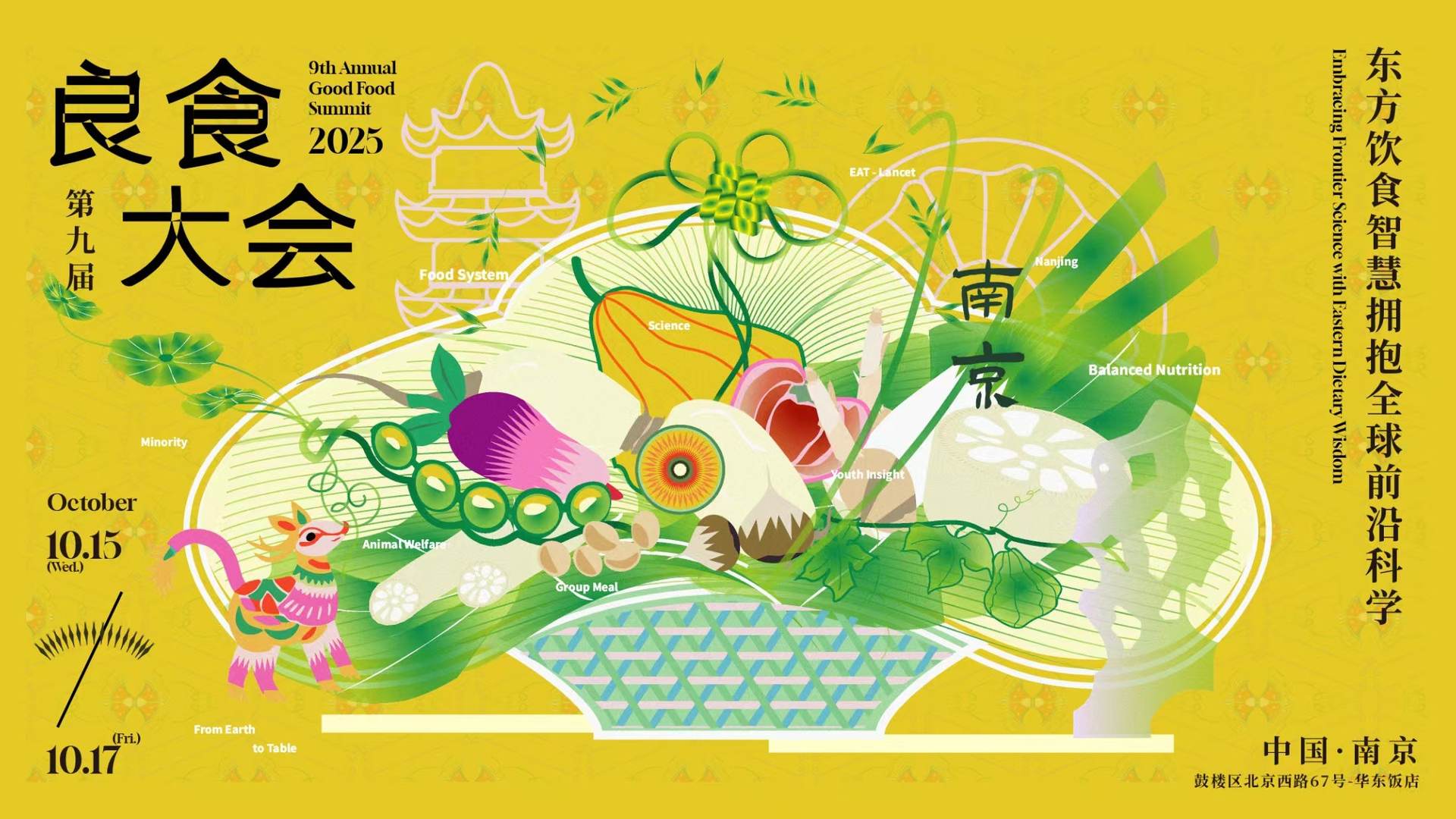
The 9th Good Food Summit, themed "Embracing Frontier Science with Eastern Dietary Wisdom," was held in Nanjing from October 15-17, 2025. Through one main forum, six parallel sub-forums, and one special workshop, the event brought together nearly 300 participants—including policymakers, experts, practitioners, youth, and consumers from agriculture, food, nutrition, climate, and communication fields—to explore how to integrate globally recognized healthy and sustainable dietary principles with local practices such as the “Eastern Healthy Diet.” Focusing on planetary health, plant-forward approaches, animal welfare, and policy action, the forum aimed to accelerate food system transformation toward health, equity, and sustainability, reaching an online audience of 80,000 viewers and receiving coverage from over 20 major media outlets.
Main Forum: Converging Global Science and Local Wisdom — Unlocking Pathways for Sustainable Food Systems Transformation
The opening ceremony and main forum of the conference, held on the morning of October 16, centered on the theme "Embracing Frontier Science with Eastern Dietary Wisdom." It focused on the sustainable transformation of food systems, aiming to build global consensus, interpret cutting-edge science, share Chinese practices, and establish a cross-sector collaboration platform. Through speeches, keynote addresses, case awards, and a panel discussion, the forum achieved a deep integration of global perspectives and local practices, resulting in key areas of agreement.

Core Challenges
- The Dual Pressures of Health and Environment: Unhealthy diets contribute to rising rates of chronic diseases, while food systems account for a significant portion of carbon emissions. These dual crises demand coordinated solutions.
- The Gap Between Concept and Implementation: A disconnect exists between global frontier concepts and actual public behaviors and industry practices, coupled with insufficient synergy between policy and market forces.
- The Challenge of Regional and Cultural Adaptation: International dietary models cannot be applied directly. There is a need to explore Eastern wisdom to achieve localized innovation.
Highlights
- High-Level Participation: Featured influential leaders including the Deputy Director of WFP China Office and the Chief Expert from the China CDC.
- Global Science Launch: Introduced the groundbreaking EAT-Lancet 2.0 report with direct insights from EAT-Lancet 2.0’s leading scientists – Dr. Line Gordon and Dr. An Pan, the only Chinese Commissioner. The report explicitly presents the Planetary Health Diet (PHD) as a global reference diet.
- Regional Strategy Preview: Senior Advisor to the WHO Asia-Pacific Centre for Environment and Health presented their 5-year strategic plan for food systems.
- Showcasing China's Action:
- Good Food Fund's case collection for 5 consecutive years has curated 101 exemplary practices from across the food system.
- The 2025 collection highlights a shift from single-point innovations to systemic transformation, with 18 new cases featuring 7 cases producing/promoting plant-based food products and 4 cases producing/promoting animal welfare products
Key Consensus
- Addressing Meat Consumption: There is clear consensus on the over-consumption of meat in China—a critical point underscored by the China CDC's Chief Expert—necessitating a reduction in animal product intake.
- Relevance of Planetary Health Diet (PHD): The EAT-Lancet 2.0 report provides a more flexible, culturally adaptable, and actionable framework than its predecessor, offering robust scientific evidence to inform future updates to China's national dietary guidelines.
- Integrate Global Science with Local Wisdom: Localize the Planetary Health Diet by integrating Eastern dietary philosophies (e.g., the 24-Solar-Term framework, traditional grain-centric nourishment).
Multi-stakeholder Dialogue: A Deep Dive into the EAT–Lancet Commission 2.0 Report
This dialogue on the afternoon of October 16 convenes global and Chinese researchers, industry leaders, media representatives, and practitioners to translate the science of the EAT-Lancet 2.0 report into actionable pathways for food systems transformation, focusing on concrete steps to bridge the gap from knowledge to implementation.
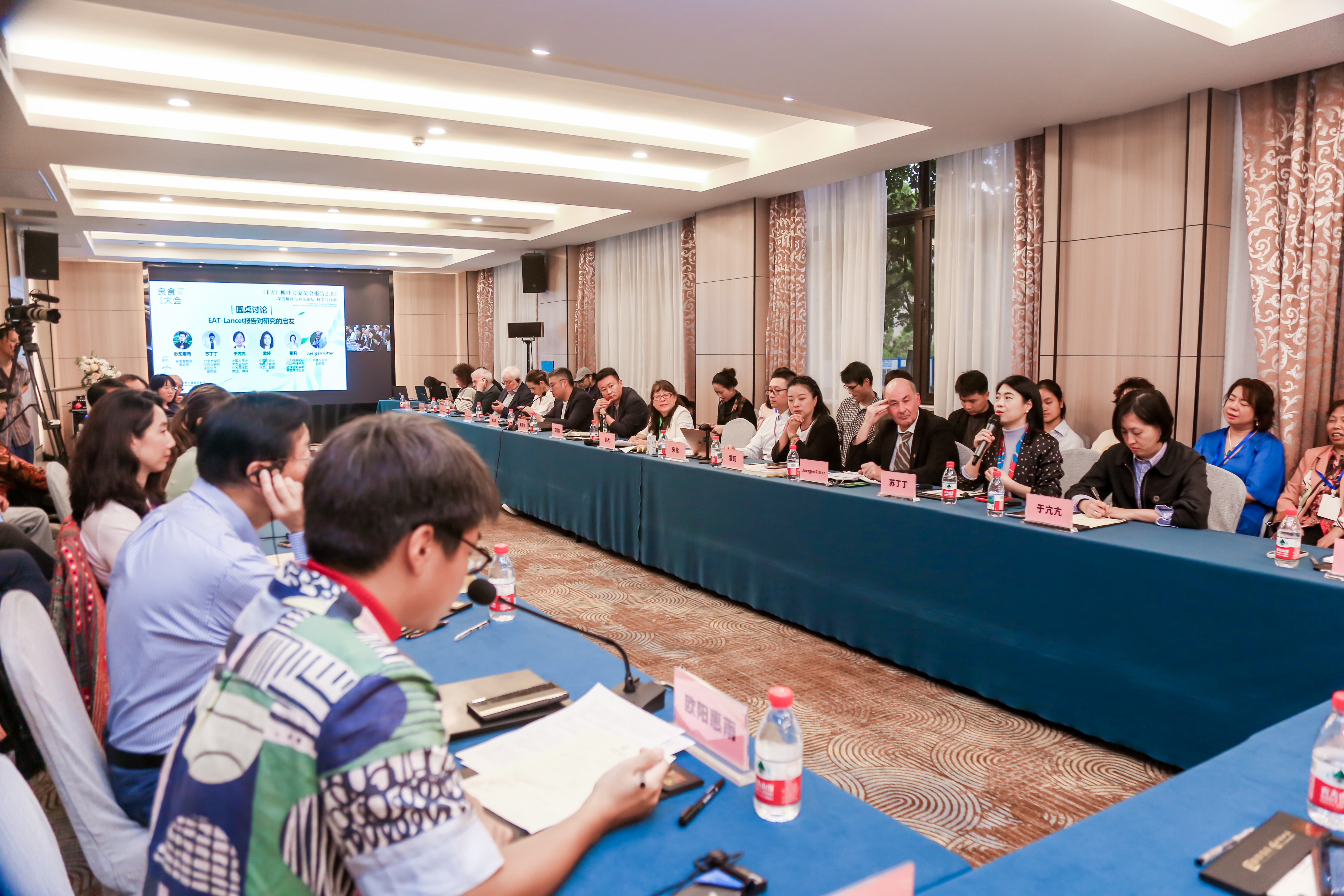
Highlights
- Actionable Framework: The EAT-Lancet 2.0 report outlines 23 specific actions, emphasizing policy integration and multi-stakeholder coalitions to overcome structural barriers.
- Research Insights: Scholars urge expanding the food-system lens to include mental health and cultural values, advancing supply-chain transparency, shifting policies from subsidizing quantity to incentivizing quality, and fostering Sino-German cooperation on climate-smart agriculture.
- Sectoral Pathways: Industry leaders highlighted actionable strategies across food sectors: promoting health-gastronomy balance in catering, improving affordability of sustainable products, returning to whole grains, and adopting practical tools to mainstream plant-based diets.
- Combating Food Waste: Global and local practices—from EU legislation and food-bank networks to Nanjing’s city-level management—demonstrate scalable models linking supply-chain efficiency, social equity and emissions reduction.
- Public Science Communication: The dialogue facilitated direct exchange between scientists and mainstream media. Subsequent media coverage and public interpretation of the Planetary Health Diet have sparked widespread public readership and discussion, effectively bridging scientific knowledge with societal awareness.
Key Consensus
Transforming food systems requires integrated action across policy, industry, and consumer behavior. Priorities include establishing cross-governmental coordination mechanisms, scaling efficient and equitable models like food banks, redesigning incentives toward sustainability and quality, and leveraging international collaboration—all supported by science-based targets, education, and accessible product innovation.
A Cross-Disciplinary Examination of Animal-based Foods From the Perspectives of Health, Environment, and Animal Welfare
This forum on the afternoon of October 16 focused on the pivotal role of animal welfare in the transition toward sustainable food systems, aiming to address current challenges in health, environment, and ethics. By integrating scientific evidence, ethical reflection, and social advocacy, it sought to explore pathways to raise public awareness of the importance of animal welfare, advance its inclusion in mainstream public discourse, and lay the groundwork for building a healthy and equitable food system.

Highlights
- 14 cross-sector speakers from academia, NGOs (CIWF, RSPCA, ICCAW, WAP, CSAPA), art & media.
- Integrated science, ethics, and communication, bridging research, policy, and public engagement.
Key Messages
- One Health Reality: Animal welfare can underpin human health & ecological resilience.
- Empathic Communication: Change should be promoted through understanding, not confrontation.
- Cross-Sector Collaboration: Align business, education & media for visible, welfare-driven practices.
- Cultural Resonance: Anchor the movement in Chinese traditional philosophy of “Harmony among all beings.”
Outcomes
- Facilitated animal welfare from a niche topic to mainstream public agenda.
- Strengthened cross-sector networks for policy advocacy & social communication.
- Created a shared narrative linking welfare, health, and sustainability.
- Positioned the Good Food Fund as a key convener in sustainable food system transformation.
Showcasing Food Systems Transformation: Multi-Sector Best Practices and Scaling Impact
This forum on the morning of October 17 centered on sharing and scaling best practices for food systems transformation. By connecting diverse stakeholders across production, consumption, and education/communication, it aimed to build consensus and identify collaborative pathways for broader impact. The discussions drew upon a curated review of five years of Good Food case studies.

Purpose
- Link Resources: Network dispersed practices from Good Food cases into a multi-stakeholder collaborative ecosystem.
- Crack the Core Code: Through exchange, clarify how multi-sector actors can jointly promote plant-forward and animal-welfare concepts to guide consumers and influence industry.
- Cultivate Action: Recognize outstanding practitioners to motivate wider participation and grow the collective force for transformation.
Key Messages & Highlights
- Deepened Case Value: Synthesized insights from 100+ Good Food cases, with presentations from 11 organizations and expert review, highlighting their leading role in driving change.
- Clarified Collaborative Pathways: Identified key collaboration needs: balancing mission and business for brands, overcoming tech and cost barriers in production, and focusing on context and engagement in consumer outreach.
- Expanded the Action Force: Honored three "2025 Meatless Monday China Ambassadors" and joined forces with Joyoung Foundation, Fooducate, and others to broaden the coalition for food education.
- Integrated Theory & Practice: Experts connected practice with policy, proposing next steps like case standardization, policy linkages, and international promotion while businesses provided actionable frameworks for implementation.
Integrating Eastern Healthy Diet with Agricultural Tourism and Culture: Pathways to Synergy and Replicable Models
This forum on the morning of October 17 aims to address current bottlenecks in agritourism development—where many projects remain limited to basic farm produce sales, failing to convert dietary culture and health values into sustainable industry momentum. With the Eastern Healthy Diet as a guiding framework, the event explored how to systematically leverage intangible cultural resources such as the "Five Grains as Nourishment" philosophy, seasonal eating, and medicinal cuisine, in order to build complete experiential chains from field to table. Through expert talks and practical case sharing, participants examined pathways to translate concepts into tangible products, immersive scenarios, and innovative formats—ultimately fostering an integrated model of “Eastern Healthy Diet + Eco‑tourism + Wellness Leisure.” The forum concluded with a collective call to action, emphasizing cultural empowerment and industry ecosystem collaboration, and yielded preliminary cooperation intentions for concrete agritourism projects rooted in Eastern dietary heritage.

Highlights
The forum hosted 14 speakers. Through talks and real-world case sharing, the forum systematically examined integration pathways and viable business models.
Key Messages
- Policy & top-level design: Align with local characteristics and the “food as medicine” tradition to create integrated “eat, drink, play” experiences—avoiding homogenization.
- Industry integration: Demonstrated the feasibility of linking eco-farms via public branding, and of deeply integrating the primary (growing), secondary (processing), and tertiary (culture/tourism) sectors around distinctive ingredients.
- Commercial sustainability & program design: Distilled a core methodology—food is an “economic activator”. Profitability can come from diversified revenue models such as farm sales + cultural classes + boutique lodging, alongside operating tactics like starting small, building a distinct signature, and valuing membership.
- Product design: Proposed developing healing dishes and pre-packaged products, pairing local specialties with returning college-grad entrepreneurs, and creating “food-experience” tourism products—offering concrete ways to make the Eastern Healthy Diet visible, marketable, and more valuable.
Outcomes
- A call to action: to place Eastern Healthy Diet at the core, and to inject unique substance and lasting momentum into agricultural tourism projects through cultural empowerment and industrial ecosystem.
- The Good Food Fund also reached preliminary cooperation intent on concrete Eastern-Healthy-Diet agritourism projects with partners including Zhang Min, founder of Nanjing Puyu; Zhou Min, executive managing editor of the influential local media Gourmet magazine in Nanjing; food-culture scholar Sun Lin; and Zhang Xiaolong, director of Taiwan’s Happiness Granary.
Eastern Healthy Diet in Food Services: Navigating Transformation for Sustainable Growth
This forum on the afternoon of October 17 was a timely response to the pressing challenges in the F&B sector, including market restructuring and the debates surrounding pre-made meals. It centered on promoting the Eastern Healthy Diet concept and guiding the industry’s transition toward sustainability and health. Bringing together policymakers, experts, chefs, and media, the event aimed to raise awareness, foster collaboration, and explore viable business models that align health with profitability.
Through policy insights, practical case studies, and hands-on roundtable discussions, participants examined everything from sourcing traceable ingredients and building resilient supply chains to engaging consumers and communicating brand values. The forum culminated in the launch of the Eastern Healthy Diet & Hospitality Initiative—a five-pillar action framework covering responsible sourcing, healthy eating, environmental benefits, social impact, and communication & education—providing a clear pathway from concept to commercially sound practice.
By linking traditional dietary wisdom with modern operational needs, the forum offered a holistic toolkit to help the industry move beyond survival mode toward a future where health, culture, and business thrive together.

Highlights
- The forum brought together 18 guests, including policymakers, academics, international experts, Food & Beverage professionals, and industry media.
- Explored the concepts, practical applications, and future directions of Eastern Healthy Diet from multiple perspectives.
Key Messages
- Policy Perspective: Using the "Jiangnan Dietary Pattern" as a scientific benchmark, tools like the "Eastern Healthy Plate" and "Nutrition Traffic Light" make dietary science more visual and accessible.
- Cultural Perspective: Rooted in principles of zero waste, balance and moderation, and a health-first ethos, Eastern dietary traditions show an intrinsic alignment with sustainable practices.
- Cultural Perspective: Learning from French gastronomy's UNESCO success, it is suggested that Eastern Healthy Diet pursue similar heritage status, develop traceable ingredient systems, and return to traditional, trust-based supply chains.
- Consumer shift: Gen Z is increasingly willing to pay for wholesome ingredients—and for the emotional value that comes with eating well.
- Food-system transformation: Change is moving slowly. Parents should introduce plant-rich diet to children with a respectful approach, and restaurants need to prioritize creating an emotional connection with guests.
- From concept to practice: How do we build eco-healthy restaurants that the market embraces? We propose restaurant standards and a closed-loop model linking eco-farmers → chefs → consumers. To make healthy ingredients both delicious and commercially viable, weigh food safety, flavor, and the principle of “simple yet deeply satisfying,” and use smart standardization to balance health and efficiency.
Outcomes
- The forum released the Eastern Healthy Diet & Hospitality Initiative, an action framework for industry transformation across five pillars: responsible sourcing, healthy eating, environmental benefits, social impact, and communication/education—helping move from awareness to real-world practice.
- Stakeholders including Food Technology, Zhejiang Provincial Association for the Promotion of Healthy Diet, and the Hangzhou Chefs’ Association voiced support and will help promote the initiative across the sector.
Engaging the Next Generation: How to Attract and Empower Young Changemakers?
This forum on the afternoon of October 17 centered on food systems transformation with a focus on promoting the "Eastern Healthy Diet," aiming to galvanize youth engagement, explore empowerment pathways, and build a sustainable network of action-oriented individuals. In preparation, insights from the Good Food Youth Initiative’s practical outcomes were reviewed, alongside gathering materials from international case studies and domestic youth-led action stories. Through guest speeches, action launches, and roundtable discussions, in-depth dialogue was facilitated, leading to key shared understandings.

Highlights
- Cross-sector, diverse participation: Eight youth representatives from academia, NGOs, government, business, and independent media (content creators), plus 40+ youth participants; the event is livestreamed to connect online and offline audiences.
- Practice-oriented: Focus on campuses, communities, and rural settings; share actionable cases and communication pathways on animal welfare, ecological agriculture, and plant-forward lifestyles.
- Emotion + reason: Combine resonant personal action stories with pragmatic thinking at the policy and industry levels.
- Action Examples: Good Food Youth Program, Plant-forward plate pilots, Animal-welfare awareness campaign, Podcast outreach on sustainable diets, Research and creative projects on biodiversity ingredients, etc.
Key Consensus
- Action should start small (e.g., choosing plant-based foods; short-form educational content on animal welfare).
- Use diversified communication to bridge knowledge gaps and build a community of shared values.
Cross-sector Mobilization & Outreach
- Bring together cross-sector youth and build platforms for exchange and collaboration.
- Promote plant-forward and animal-welfare concepts, reaching students, urban residents, and rural practitioners.
Actionable Models & Creator Community
- Provide implementable models that motivate more youth to engage in sustainability through everyday eating.
- Build a community of youth content creators.
Workshop: How Can University Catering Achieve a Healthy and Sustainable Diet Transformation?
On October 15, one day before the formal opening of the conference, a special workshop focused on university catering was held. The workshop brought together over 50 participants, including logistics heads and catering directors from top universities in China and the US, leaders of large-scale contract catering companies, researchers, supply chain enterprise representatives, and public welfare practitioners. They engaged in in-depth discussions around a core issue: Amid both opportunities and challenges, how can China’s university catering, serving tens of millions of faculty and students, successfully move towards a healthy and sustainable future?

Background
- Significant Leverage: Institutional food service represents more than 40% of the total food service market in China.
- Focus on Universities: A critical intervention point due to (1) Prevalent student dietary imbalances; and (2) a living lab for solutions (R&D, student activism).
- Building on Momentum: Domestic and global universities are pioneering new approaches, creating a need to share practices and scale impact.
Purpose
- To build consensus and explore pathways for a dietary transformation.
- To share domestic and international case studies to inspire effective action.
- To establish a multi-stakeholder collaboration platform.
Highlights
- High-level and Voluntary Engagement: Despite having no KPI requirement to attend a civil society-led conference, catering directors and researchers from 5 of China’s top 10 universities, together with 3 leading catering companies, and government and industry experts actively participated, demonstrating the event's success in addressing their core needs and sparking genuine interest for collaboration.
- Unique Global Dialogue: Featured the in-person participation of the Assistant Vice Chancellor of Auxiliary Enterprises at UMass Amherst—renowned for its #1 ranked Best Campus Food in the U.S. for 9 consecutive years—enabling a rare and deep exchange on global best practices.
- Action-Oriented Preparation: In-depth case studies on 3 Chinese and 4 international universities were developed pre-workshop, providing a concrete foundation for discussions.
Key Stakeholder Challenges
- Cost Pressure: Rigid pricing structures and cost controls – Identified by both university catering directors and catering companies as the primary challenge.
- Operational & Student Engagement Hurdles: University catering directors grapple with technological and data gaps, and face the ongoing challenge of aligning healthy diet promotion with student satisfaction and preferences.
- Systemic & Supply Chain Barriers: Catering companies highlight the lack of policy incentives and supply chain limitations as major barriers.
Core Consensus & Systemic Levers
- Policy & Standards: Reform pricing and procurement mechanisms to incentivize menu innovation.
- Food Education: Embed food education across life stages to bridge the awareness-action gap.
- Demand-Driven Supply Chains: Use consumer "precision nutrition" needs to guide agricultural production and reduce waste.
- Localized Innovation: Combine technical solutions (e.g., smart canteen, carbon accounting) with traditional food wisdom (e.g., 24 Solar Terms).
- Multi-stakeholder Collaboration: Launch cross-sector pilot projects to address systemic barriers and build evidence for scalable solutions.
The Path Forward
- Recipe development and food education are identified as priority actions in the near future.
- Continue building momentum for a joint initiative and a sustained action coalition.
- Advance systemic change through the identified levers and collaborative pilots.
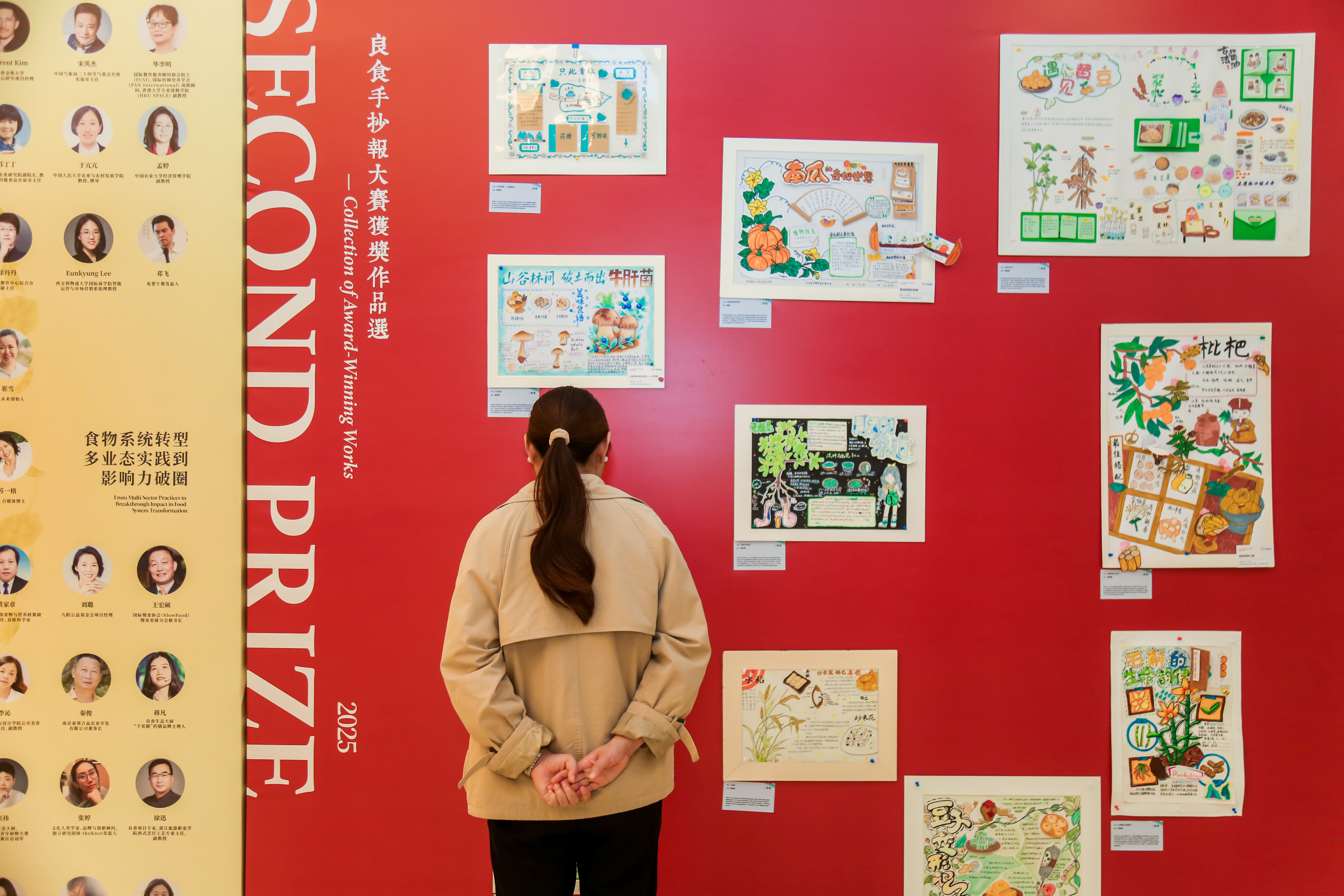
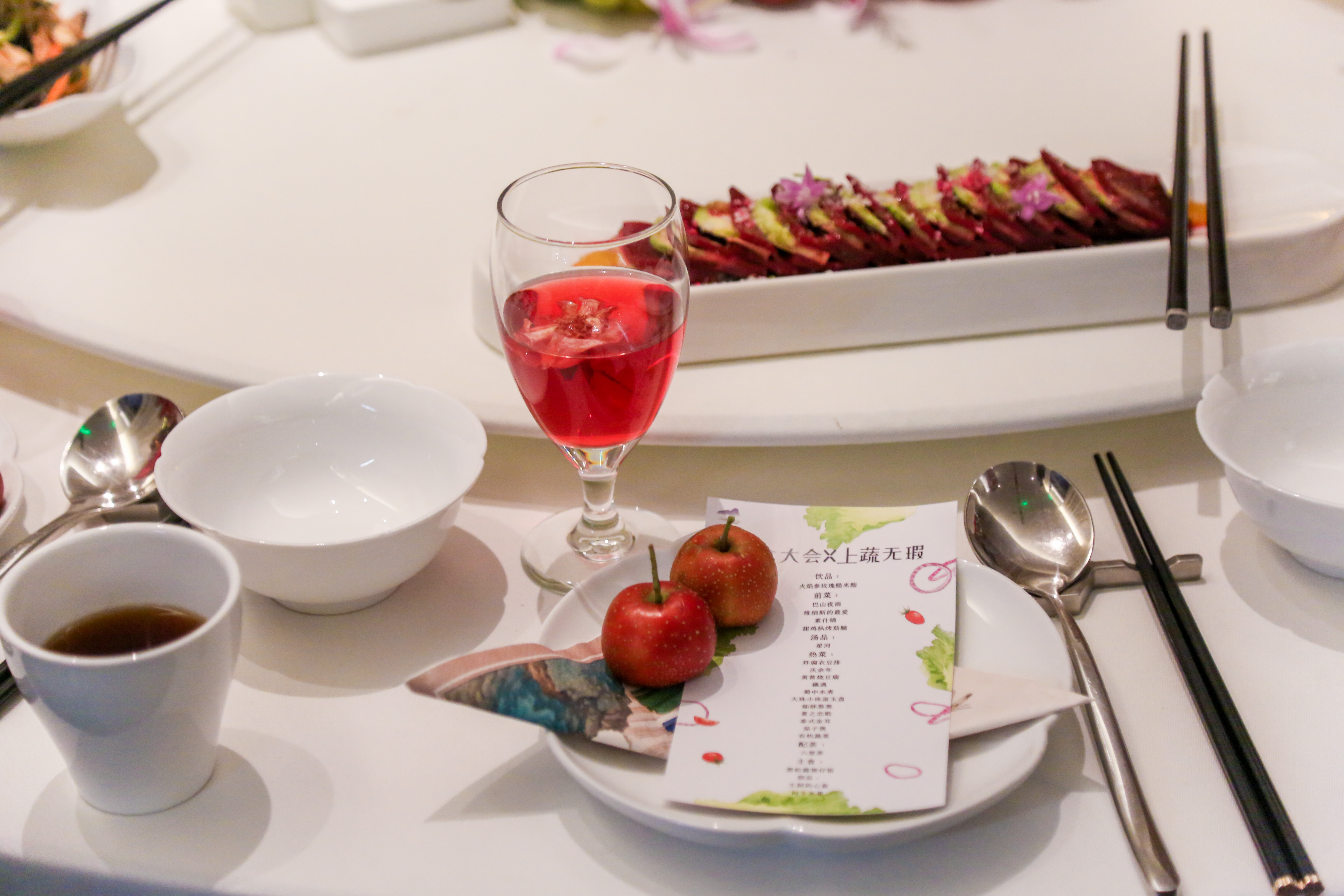
Beyond the substantive forum discussions, the event also showcased the award-winning entries of the 2025 Good Food • Hand-drawn Poster Competition and hosted a plant-based Good Food Eco-Aesthetics Gala Dinner. Take a visual tour through the photos below to experience these highlights!